
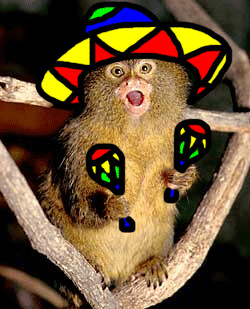
Percussion 101: How to Play Shakers and Maracas

All percussion players will have to play some type of shaker regardless of the music setting. Whether you are playing in a salsa band, an orchestra, or in the front ensemble of a drum and bugle corps, you will encounter various types of shakers from a variety of different parts of the world.

Shakers are simply percussion instruments that create sound primarily by shaking them, thus the obvious name. However, there are dozens of types of shakers. Some, like the tambourine, are classified separately because of the more advanced percussion techniques required to perform on them.

The most common shaker is the maraca, a percussion instrument of Latin American origin. This shaker is often filled with rocks, beads, shells, or seeds, and the maraca may be made out of natural materials like a gourd or wood or can be made out of manufactured plastic. The maraca is most often played by holding the handle and moving the instrument up and down, causing the beads to knock against each other and the inner wall of the maraca. The percussion player will often play two maracas at the same time. Maracas can be found everywhere from the wind ensemble, the mariachi band, the symphony orchestra, to even a middle school band.

A shekere is an African shaker that constitutes of a large hollow gourd laced on the outside with various beads or shells. A shekere is often a work of art, with intricate designs and complex beading patterns. It is also played by holding the thinner end of the gourd (the handle), but the percussion performer must move it slightly differently to have the beads properly knock against the outside of the gourd in time. The larger flat end may be struck, as well.

An egg shaker resembles an egg and may be made out of plastic, wood, or even metal. This shaker is most often used in popular music settings and is held in the palm of the hand. The egg shaker is often preferred by singers because of its quieter sound and easy technique.

There are many other types of shakers, from sticks covered in metal plates to familiar shakers like the jingle bells often used at Christmas time. There are caxixi, bone rattles, and African reed shakers. Each type of shaker has its own unique percussion sound and percussion technique, and most percussion players own at least a dozen different types of shakers.

Comments

Popular posts from this blog

Percussion 101: How to Play Hand Crash Cymbols

Young Girl Plays Cymbals The hand cymbals (or crash cymbals ) are extremely versatile percussion instruments . The hand cymbals are used in the military, drum and bugle corps , the orchestra, and wind ensembles. Proper percussion hand cymbal technique takes many years of practice and hard work, as well as stamina and upper body strength. The most common use of the hand cymbals is in the drum line, whether in a high school band or a professional drum and bugle corps. Two cymbals are held by straps to the cymbal player's hands. In marching band and drum and bugle corps, the cymbal player often will loop their own hand in the strap, then grab the strap.  Protect Your Hands Tape, strap pads, and gloves are often used to protect the cymbal player's hands from blisters and the slow grinding away of skin during a lengthy band show. In the orchestra setting, where the crash cymbal is often reserved for music accents and shorter music passages, the percussion player does...

Machinima Magic using Moviestorm, Final Cut, and Photoshop

For those who have been wondering about the hiatus here at the New Music Resource, wonder no more! The past six months I have been working on a sci-fi machinima musical Libertaria: The Virtual Opera . Created almost entirely in the machinima software platform Moviestorm and scored with a catchy combo of electronic music, film scores, and dramatic vocals, Libertaria has been an incredible collaborative project. Moviestorm has been an excellent and inexpensive way to create an entire epic sci-fi tale for a minimal amount of resources. Almost three years ago I started using Moviestorm for a variety of video projects, and then decided to make an entire feature length musical using only machinima. The project proved challenging, involved a couple of dozen singers, animators, and other artistic professionals volunteering their talent and resources to create an incredible feature. W atch a the lo-res version of  the song Pilar of the Underground from Libertaria: The Virtual Opera : ...

Top 5 Music Theory Websites for Music Students and Teachers

Music theory students and teachers can benefit from additional learning from online resources. Today's student is used to interactivity and multimedia, and these music websites can help augment the usual classroom fair, whether you are teaching elementary music or basic theory for college freshman. Most of these theory websites provide user-friendly lessons with colorful illustrations, and a few even provide online exercises.  Musical U Musical U is an online community that provides ear training and music theory expertise, detailed lesson plans, examples, free practice audio, and more.  Ricci Adam's Music Theory.Net Ricci Adam's Music Theory.net is my favorite online music website. Not only does the online music site provide lessons in everything from basic intervals to Neapolitan chords, there are also a large number of exercises. Additional utilities include a chord calculator and a matrix calculator for serialism lessons. Additionally, there are basic exercis...